
Hi! I’m Sam
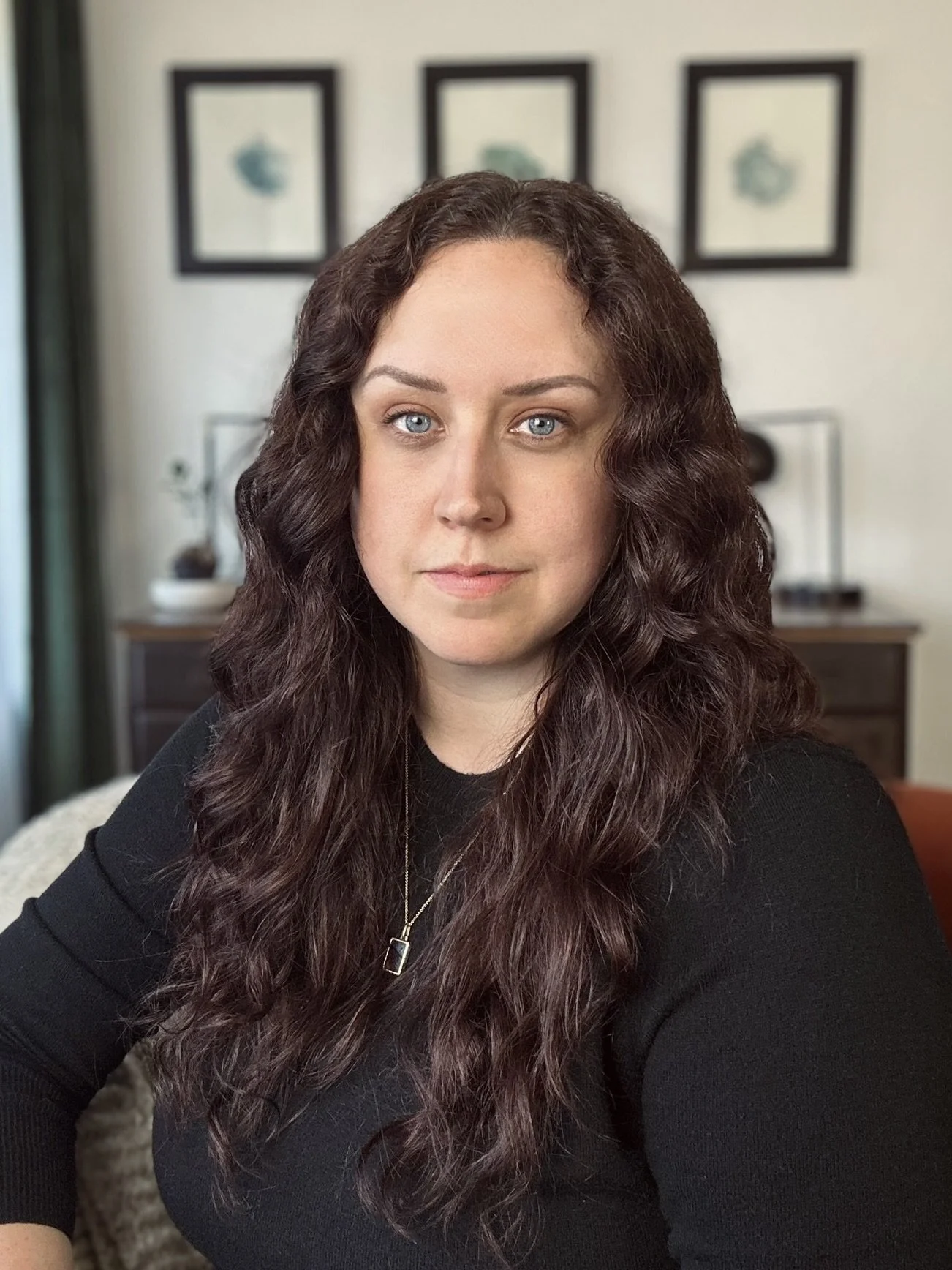
Sam McCann
LMHC, C-NDAAP
I know what it’s like to have big plans for your time off and then end up doing something much quieter, like watching TV with your dogs for hours or staring at the wall because your brain feels overloaded. I used to feel a lot of guilt about that.
Now I know that sometimes the most appropriate choice for me is watching Parks and Rec again start to finish for the 97th time. You know….for my mental health.
Like many of the adults I work with, my day-to-day life is supported by lists, reminders, and systems that help me stay oriented (hello Post-its and spreadsheets!). I don’t always have everything together, but I’ve learned how to notice when I’m overwhelmed and how to get myself back on track without shame.
For a long time, I felt like other people had access to some rulebook that I’d missed. I tried to adjust myself to fit what I thought was expected—working harder, performing more, hoping that if I did it “right,” I’d finally be let in on the secret. Through my own therapy, I learned that I don’t need to perform to be loved, and that being my true self is not something I have to earn.
That experience shapes how I work as a therapist.
I specialize in working with late-identified and self-identified ADHD and Autistic adults who are navigating anxiety, chronic masking, burnout, and questions of self-worth. Many of the people I work with are thoughtful, capable, and exhausted from trying to keep up in a world that was not designed with their brains in mind.
My role is to help quiet the noise—internal and external—so you can better understand who you are, what actually matters to you, and what kind of life feels sustainable and meaningful for you. While my experiences are not the same as yours, I know how powerful it can be to finally make sense of yourself through a neurodivergent-affirming lens.
This work isn’t just about self-acceptance, though that’s an important part of it. It’s also about building a life that genuinely feels good to live. That might mean redefining success, finding relationships that truly support you, reconnecting with what excites you, or letting go of the pressure to be someone you’re not.
My goal is to support you in creating a life that feels like yours—not just one you’re managing or trying to keep up with.
The Technical Stuff
Certified Neurodiversity-Affirming Assessment Practitioner
Neurodiversity-Affirming Therapist
Existential Therapy
Acceptance and Commitment Therapy (ACT)
Trauma informed
Gifted/2e informed
Training + Approach
Master’s of Arts, Clinical Mental Health Counseling | Antioch University
Bachelor’s of Arts, Interdisciplinary Visual Arts | University of Washington
Education
Licensed Mental Health Counselor (LMHC)
Washington | License# LH61667389
Licensure
About Oh, That’s Why! Therapy & Assessments
“Oh, that’s why!” is the moment when things finally start to make sense.
It’s the realization that you weren’t broken, lazy, or failing—you were navigating the world with a brain and nervous system that were never fully understood, let alone properly supported. For many late-identified neurodivergent adults, that realization can feel grounding, disorienting, relieving, and painful all at once.
This practice exists to support that moment with care, accuracy, and compassion.
My Approach
I provide neurodiversity-affirming therapy and assessments for adults—primarily those who were identified later in life or who are self-identified and seeking clarity.
I am also late-diagnosed myself.
That lived experience informs my work, but it does not replace clinical rigor. It means I understand, both personally and professionally, how disorienting and meaningful late identification can be, and how much nuance and care this process deserves.
At the core of my work is the belief that you make sense. Your experiences, coping strategies, and patterns developed in response to real environments and expectations. Therapy and assessments support you in understanding how you’ve been navigating, what’s been costing you, and what might support you more sustainably going forward.
My approach is trauma-informed, collaborative, and grounded in respect for neurodivergent ways of thinking, communicating, and being.
Accommodations Menu for All!
Movement
Feel free to move around your space, rock in your chair, stand up and sit down as needed. You can lay down or sit on the floor if that is more comfortable for you.
Fidgets and Stimming
Please use fidgets, doodling supplies, fiber arts, and whatever else you do to help you self-regulate to session with you.
Communication
We can make use of alternative forms of communication in session including the chat feature in telehealth, virtual whiteboards, or your own communication support device.
Eye Contact
There is zero expectation for you to make eye contact with me. You also have the option to request that I limit eye contact with you as well.
Eating
Feel free to eat and drink as needed during session.
Why I work with late-identified neurodivergent adults
Many of the adults I work with spent years feeling like something was “off,” without having language for why. Some were overlooked because they masked well. Others didn’t fit common stereotypes. Many were labeled in ways that never quite captured their experience.
Late identification often comes with complex emotions—relief at finally having an explanation, grief about what might have been different, and uncertainty about what this new understanding means for the future.
I specialize in this work because it deserves care, time, and nuance. Understanding yourself later in life isn’t a failure, it’s often the result of insight, persistence, and survival.
What neurodiversity-affirming care means here
Neurodiversity-affirming care means your brain is not treated as a problem to solve.
In practice, this means:
respecting self-identification and lived experience
recognizing the impact of chronic masking and systemic barriers
focusing on support and accommodation rather than assimilation
centering collaboration, transparency, and consent
Whether we’re working together in therapy or through an assessment, your perspective matters. You are the expert on your own experience.
Therapy and assessments that adapt to you
Therapy and assessment should not require you to perform, over-explain, or push past your limits to be understood.
In our work together, we:
move at a pace that feels manageable
make expectations explicit rather than assumed
adjust structure as needed
prioritize clarity and predictability
Vibe Check
Finding the right provider matters—especially if you’ve had experiences where you felt dismissed or misunderstood.
Before moving forward with therapy or an assessment, we’ll connect briefly to see if this feels like a good fit. You’re encouraged to ask questions, share concerns, and take the time you need to decide.
Clarity and consent are part of the work.
“Oh, That’s Why!” is both a name and a process.
It’s the moment when patterns come into focus, self-blame loosens its grip, and there’s space to relate to yourself with more understanding and care. That moment doesn’t fix everything—but it often changes how everything is held.
I am here to support that shift.
Getting Started
If you’re curious about therapy or an assessment, you’re welcome to reach out—even if you’re unsure what you’re looking for yet.
You don’t need to have the right words.
We can start where you are.